Global Network Programme
Strategic leadership for a complex world
The Global Network Programme engages directly with the forces reshaping international affairs.
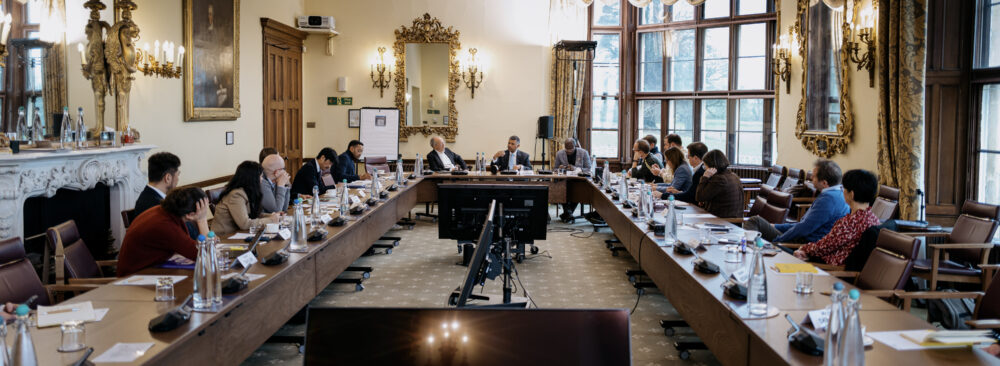
The Global Network Programme (GNP) is the flagship programme of the Diplomatic College from the Foreign, Commonwealth and Development Office (FCDO). The programme brings together leaders from UK government, foreign governments, business, academia and civil society for exclusive exchange and shared learning to help navigate today’s shifting geopolitical landscape.
We are operating in the most volatile and interconnected moment of our working lives, defined by geopolitical tensions, technological disruption and shifting economic dynamics. In this context, the ability to navigate ambiguity with confidence, build trusted relationships across sectors and respond with agility is your own critical infrastructure.
Under the Chatham House Rule, global speakers, diplomats and policy makers bring current, hard-won insight directly into the room, offering a depth of frank exchange few other forums can offer. Partnerships with leading UK academic institutions bring together real‑world experience and the latest scholarly insight.
Global Network Programme graduates join a sustained network, with ongoing access to senior-level exchanges, events and relationships with policymakers, academics and distinguished practitioners.
“Reaching out to different sectors makes you understand different drivers and motivations behind the same topics. That gives you a richer perspective that you can bring back to your own business.”
Neil Skelland, Director, ATLAS UK

What you will explore
The curriculum explores the fault lines of our time: economic security and strategic competition, the evolving nature of soft power, defence and security, the geopolitics of climate and critical minerals, and the technologies reshaping international order. Across each topic, you will challenge your own thinking, learn the ‘language’ of other sectors and explore the practical: how decisions are made, how trade-offs are navigated, and what that means for the work you do.
Developed with senior officials and policy experts at the centre of UK government, the programme’s case studies, from disinformation campaigns to power plays for resources, reveal the patterns behind today’s risks and opportunities.
Everything the programme covers is anchored in a single core question: How is global power shifting — and what does that mean for the decisions you are making now? This is not a fixed syllabus. The emphasis evolves with each cohort, shaped around participants’ interests and the current international context. The topics below illustrate some of the key lenses through which previous cohorts have explored this question.
- Geoeconomics in practice – How are governments deploying tools such as tariffs, sanctions and export controls? How is the relationship between government and business changing?
- The competition for critical minerals and supply chain resilience – What does this mean in practice for governments, businesses and investors? How do we develop a framework for understanding these risks and building resilience, without simply retreating from the openness that underpins prosperity?
- Soft power and its limits – Can states use culture, education, sport and the creative industries to advance national aims and build partnerships? Participants examine real-world dilemmas facing organisations caught between commercial interests and geopolitical pressure.
- Digital power, tech supremacy and disinformation – How are AI, cyber threat and technology dominance reshaping power and digital sovereignty? What are the real choices available to actors outside of the US and China, and what relationships are needed between governments, business and other actors to manage these risks?
- Emerging powers and the multilateral system – How do countries work together in new and novel coalitions? What is the role of the multilateral system in accommodating emerging powers and how do those countries see the world?
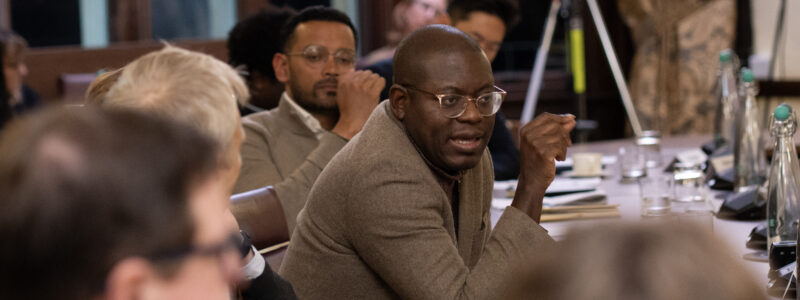
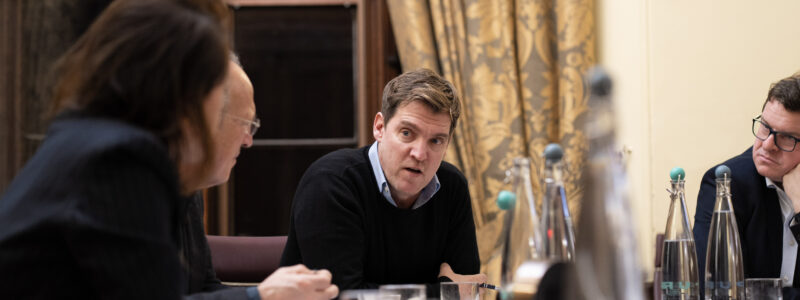
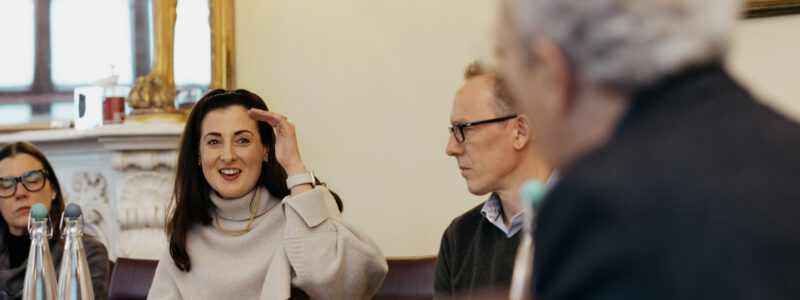
To explore these topics, the programme draws on best practice in learning, designed to develop judgement as well as knowledge. Participants are challenged through panel events, fireside conversations, workshops and bespoke case studies, supported by pre-reading where appropriate. As an active participant, you will contribute your views and learn from your peers on complex topics.
“The conversation we had about the changing nature of power is absolutely on point. Having foreign diplomats, as well as business and HMG stakeholders, lends a new thoughtfulness to this topic. “
Ed Howard, Head of International Affairs, Vodafone Group
“What I have found interesting is the opportunity to start with a particular space but allow that to take you into other areas, whether that is philosophy or behavioural science or geopolitics.”
Sarah Taylor, Director for Consular and Crisis, FCDO
One Curriculum – Two Pathways
The programme offers two pathways, tailored to leaders at different points in their careers. Both pathways help build networks with others at similar levels across sectors. Cohorts are carefully curated to ensure the right mix of sectors, backgrounds and perspectives.
Executive Pathway For those already operating at senior level – board members, senior diplomats, senior civil servants, MPs and other leaders across civil society – who want to sharpen their strategic thinking and expand their networks across sectors and borders.
Future Leaders Pathway For high-potential leaders on track for senior positions. Those who wish to build relationships that will deliver value throughout their careers.
Where you will learn
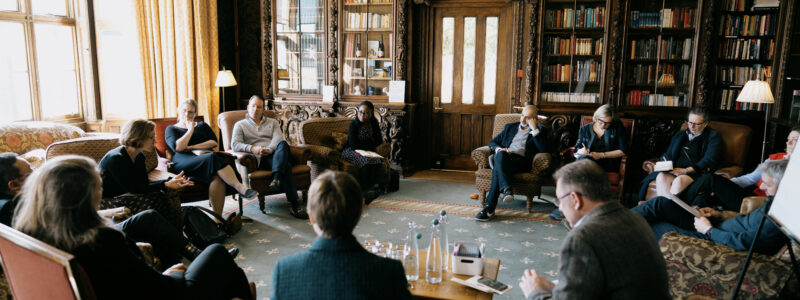
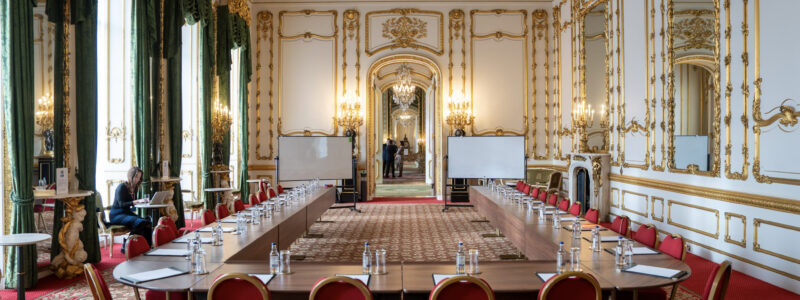
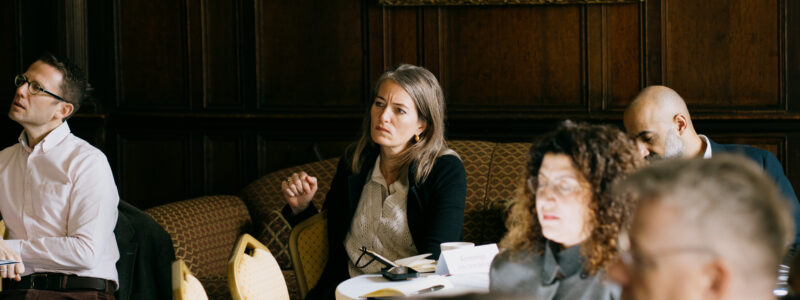
The programme takes place across some of the UK’s most historic diplomatic venues — King Charles Street, the home of the FCDO; Wilton Park, the UK’s foremost multilateral facilitator; and Lancaster House, renowned for hosting state visits — offering a uniquely powerful setting for transformative learning.

“It is inspiring to be amongst such quality, not only in discussions with peers, but also the British quality that you bring in such locations as Wilton Park. You set the bar and you set it high.”
Annemijn van den Broek, Dutch Deputy Ambassador to the UK
Network
Intentionally long-term in outlook, the programme is the entry point into a long‑term, invitation-only network.
Upon completion, participants gain sustained access to an ongoing series of senior-level exchanges, events and relationships with policymakers, academics and distinguished practitioners, extending well beyond any single cohort.
The relationships formed during the programme, and through subsequent engagement, create the conditions to form problem-focused alliances across different systems. Many of these network events are co-hosted by former GNP members, taking place in embassies and businesses across the UK and reinforcing the range of perspectives brought to bear by the programme.
Join the Global Network Programme
We welcome applications for the Global Network Programme from business, foreign government officials, UK departments with significant international portfolios, civil society organisations, researchers and NGOs engaged with global challenges. Businesses that operate internationally and navigate complex relationships with governments, whether in strategic sectors, through international supply chains, or at the intersection of policy and markets, will find the programme particularly relevant.
The right candidate brings serious professional experience and a genuine curiosity about how the world works. They want to do more than understand complex global dynamics — they want to engage with them: building coalitions and partnerships that cross sectors and borders, accessing the kind of external insight that sharpens strategic judgement, and developing the fluency to navigate complex systems with confidence. are as willing to contribute as they are to learn, and comfortable with the kind of frank, open exchange that makes the programme distinctive.